
Egyptian Journalist Mohamed Hassanein Heikal
| Arash Norouzi |
Al Ahram Weekly (1996)
In a single blow, Suez — the triumph of the Egyptian people in Suez — freed the Third World of what we may call the Mossadegh syndrome. Mossadegh had challenged Western hegemony over Iran and was defeated, and his defeat had intensified the Third World's sense of inadequacy in coming to grips with Western domination. I remember Castro telling me once: 'There we were in the mountains dreaming of revolution. And all of a sudden we saw you nationalizing the Suez Canal, we saw you fighting and winning. We could only tell ourselves if the Egyptians have been able to face up to the Israelis, the Americans, the British and the French and win, how can we not defeat Batista.'
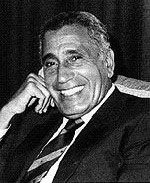 Influential Egyptian journalist Mohamed Hassanein Heikal has covered Egyptian and Middle Eastern affairs for over 60 years. From 1957-1974, he was the Editor in Chief of the Egyptian newspaper Al Ahram, and he has written at least half a dozen books on the Middle East [three on Iran, including The Return of the Ayatollah: The Iranian Revolution from Mossadeq to Khomeini (1986), and he has interviewed Khomenei].
Heikal was a former adviser and confidant to Egyptian president Gamal Abdel-Nasser and was once imprisoned by the Anwar Sadat regime for opposing its pro-Israel policies.
Nasser nationalized the Suez Canal in July 1956, nearly 3 years after the overthrow of Premier Mohammad Mossadegh, who was ousted for his nationalization of the Iranian oil industry. In a 1996 interview with Al Ahram Weekly founding editor Hosny Guindy, Heikal discussed the ramifications of Suez for the region, Cold War strategies, and “third world liberation movements” across the globe:
Interview with Hosny Guindy [Link]

Related links:
Mohamed ElBaradei on Iran's Nuclear Program
Saudi Ambassador Jamil Murad Baroody Blasts CIA at United Nations
Mossadegh in Egypt: A Hero's Welcome
MOSSADEGH t-shirts — “If I sit silently, I have sinned”


