
Former Fed Chairman Explains U.S. Oil Addiction
| Arash Norouzi The Mossadegh Project | September 20, 2007 |
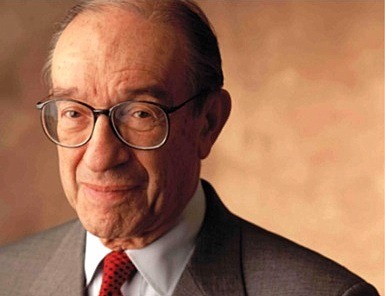 Famed economist Alan Greenspan was the Chairman of the Federal Reserve from 1987-2006, serving under four U.S. Presidents beginning with his appointment by fellow Republican Ronald Reagan.
In his new book, The Age of Turbulence: Adventures in a New World, Greenspan addresses the crucial role Middle East energy resources has on the global economy in a ‘post 9/11 world’. The portion from the book that has made headlines and aroused controversy is his assertion that America’s invasion of Iraq was mostly connected to its dependence on oil — not weapons of mass destruction.
America’s reliance on foreign sources of oil, he explains, leaves its economy susceptible to crises half a world away. Greenspan gives some past examples, including two references to the nationalization of Iran’s oil in 1951 by its democratically elected Prime Minister, Dr. Mohammad Mossadegh. Here now is an excerpt from that portion of his book with the wider context intact.
Indeed, as late as 1952, crude oil production in the United States (44 percent of it in Texas) still accounted for more than half of the world total. In 1951, excess Texas crude was supplied to the market to contain the impact on oil prices of the aborted oil nationalization by Mohammad Mossadeq of Iranian oil. Excess American oil was again released to the market to counter the price pressures induced by the Suez crisis of 1956 and the Six-Day War of 1967.
. . . . . . . . . . . . . . . . . . . . . . . . . . . . . . . . . . . . . . . . . . .
It should be obvious that as long as the United States is beholden to potentially unfriendly sources of oil and gas, we are vulnerable to economic crises over which we have little control. Petroleum is so embedded in today’s economic world that an abrupt severance of supply could disrupt our economy and those of other countries. U.S national security will eventually require that we see petroleum as an energy source of choice, not necessity.
The burgeoning global economy devours vast amounts of energy. Despite the dramatic fall in the amount of oil, and more generally energy, consumed per dollar of world output, all credible longer-term forecasts conclude that to continue on the path of world growth over the next quarter century at rates commensurate with those of the past quarter century will require between one-fourth and two-fifths more oil than we use today. Most of this oil will have to come from politically volatile regions because, as we have seen, this is where most of the readily extractable oil resides.
What do governments whose economics and citizens have become heavily dependent on imports of oil do when the flow becomes unreliable? The intense attention of the developed world to Middle Eastern political affairs has always been critically tied to oil security. The reaction to, and reversal of, Mossadeq’s nationalization of Anglo-Iranian Oil in 1951 and the aborted effort of Britain and France to reverse Nasser’s takeover of the key Suez Canal link for oil flows to Europe in 1956 are but two prominent historical examples. And whatever their publicized angst over Saddam Hussein’s “weapons of mass destruction”, American and British authorities were also concerned about violence in an area that harbors a resource indispensable for the functioning of the world economy.
I am saddened that it is politically inconvenient to acknowledge what everyone knows: the Iraq war is largely about oil. Thus, projections of world oil supply and demand that do not note the highly precarious environment of the Middle East are avoiding the eight-hundred-pound gorilla that would bring world economic growth to a halt. I do not pretend to know how or whether the turmoil in the Middle East will be resolved. I do know that the future of the Middle East is a most important consideration in any long-term energy forecast. Even though oil-use intensity has been significantly reduced, the role of oil is still such that an oil crisis can wreak heavy damage on the world economy. Until industrial economies disengage themselves from, as President George W. Bush puts it, “our addiction to oil” the stability of the industrial economies and hence the global economy will remain at risk.


Related links:
Rep. Ron Paul: U.S. Foreign Policy Designed To Protect Oil Interests
Mideast Oil of “Tremendous” Importance to U.S., Says Former Diplomat Fraser Wilkins
Newsman Ted Koppel Admits That America “Will Fight For Oil”
MOSSADEGH t-shirts — “If I sit silently, I have sinned”


